Selected work / 03
From multimediadesigner toCreative Director.
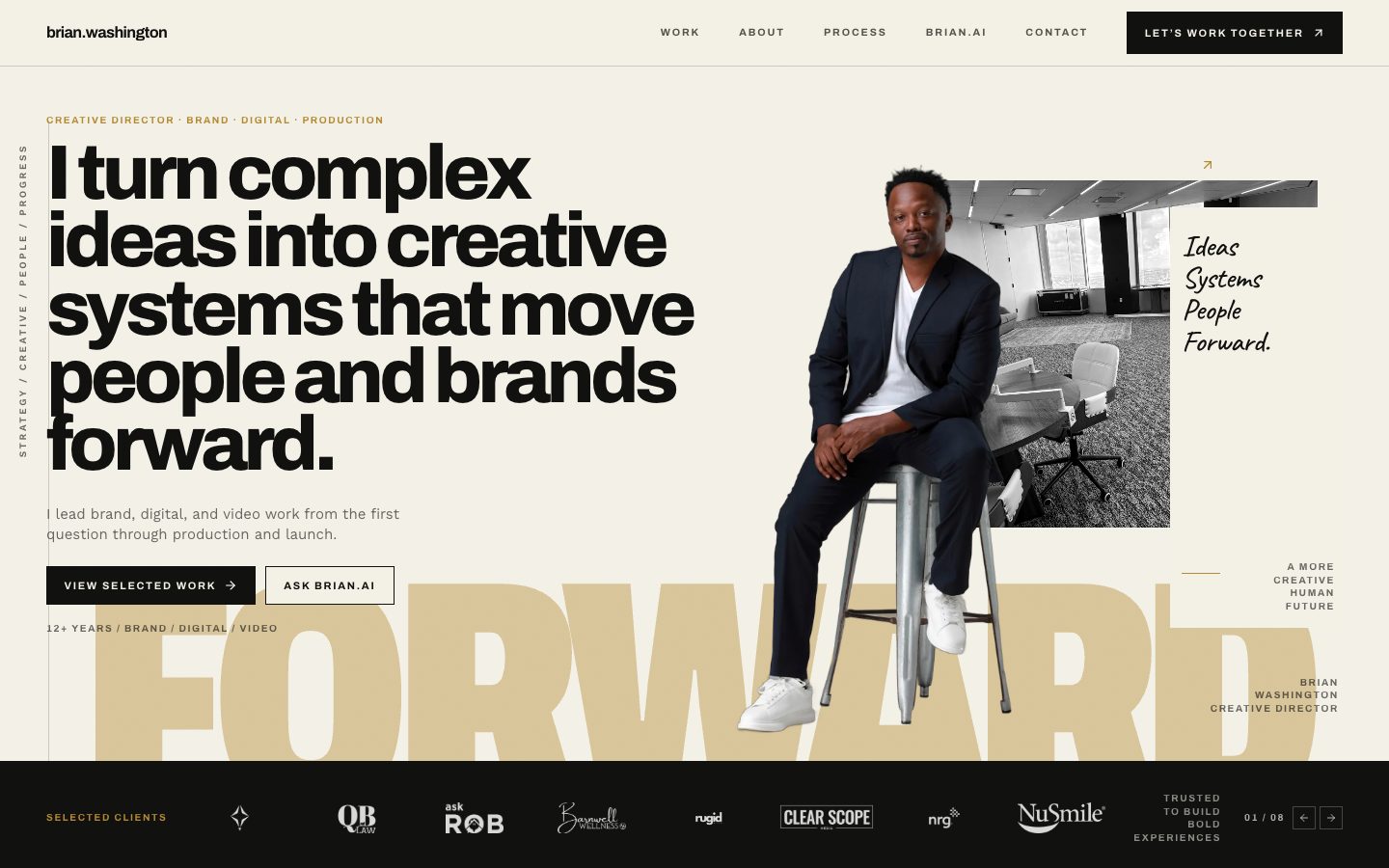
My portfolio no longer reflected the level at which I was thinking or leading. I redesigned briandwashington.com to move beyond a list of capabilities and present a clearer story about the work I direct across brand, digital experience, corporate communications, and production.
- Client
- Brian D. Washington
- Industry
- Creative Direction / Personal Brand
- Role
- Creative Director, Brand Strategist, UX/UI Designer, and Web Developer
- Deliverables
- Brand Positioning, Content Strategy, Portfolio Architecture, UX/UI Design, Responsive Development, Case-Study System, Brian.AI Experience
- Year
- 2026
01 / The challenge
The old website showed what I could make—but not how I think.
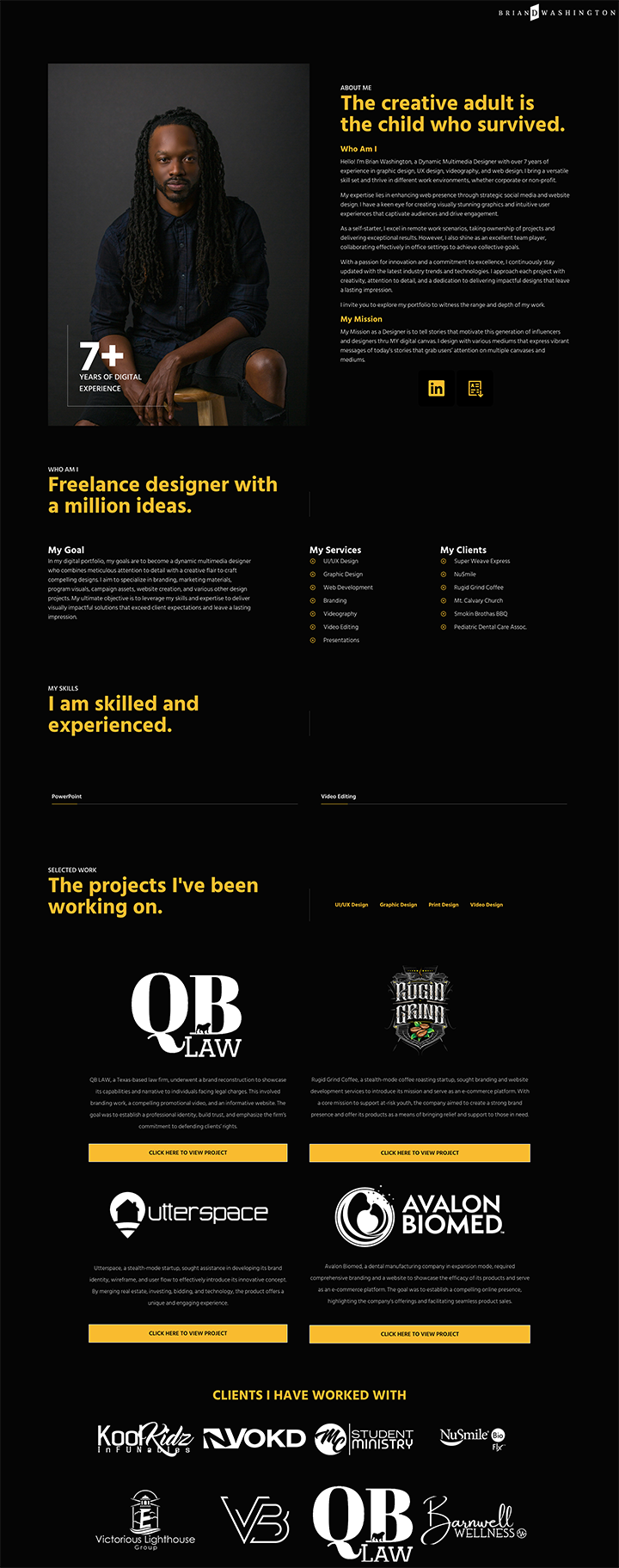
The original portfolio presented me as a multimedia designer with a broad collection of services and software skills. It showed range, but the story was scattered. Visitors could see individual projects without understanding the strategic thinking, creative direction, production leadership, or connected experience behind them. A second problem was credibility. The website stated seven years of experience even though my professional history had grown beyond twelve. The language, structure, and presentation had not kept pace with the work.
The portfolio needed to communicate leadership without hiding the hands-on experience that supports it.
02 / What I led
Rebuild the portfolio around the work I was already leading.
I led the repositioning, content strategy, information architecture, creative direction, UX/UI design, responsive development, case-study system, and interactive Brian.AI experience. Every part of the redesign was evaluated against one question: does this help someone see the leadership already present in the work?
- 01Personal-brand positioning and messaging
- 02Portfolio and content strategy
- 03Information architecture and recruiter journey
- 04Creative direction and visual system
- 05UX/UI design and responsive development
- 06Case-study architecture and project data
- 07Brian.AI concept and evidence experience
- 08Résumé, contact, and conversion pathways
The goal was not to look like a Creative Director. It was to make the evidence easier to see.
03 / The original experience
Broad experience without a clear center.
The original website used a black-and-yellow visual system, a traditional biography, capability lists, software skills, service categories, and a project gallery. The content emphasized being a freelance designer and completing many types of creative tasks.
The work was real, but the presentation placed equal weight on everything. Strategy, leadership, design, production, software, services, and personal background competed for attention instead of building one focused professional story.
Positioned as a multimedia designer
Seven years of experience shown
Services and software carried the story
Projects appeared without detailed decision-making context
Recruiters had no guided path through the evidence
04 / The key decision
Build the story around direction—not deliverables.
I stopped treating the portfolio as a list of everything I could do. The new structure begins with the problems I help solve, the disciplines I connect, and the decisions I lead. Design, film, photography, editing, UX/UI, and development remain visible, but they now support the Creative Director story instead of competing with it.
Position before portfolio.
The homepage establishes the Creative Director role before asking visitors to review individual projects.
Decisions before decoration.
Case studies explain the challenge, my responsibility, the key creative decision, and how the work became real.
Evidence before claims.
Brian.AI connects questions about leadership, skills, projects, and results to work published on the site.
Craft supports leadership.
Hands-on experience remains part of the story because it strengthens my direction, production judgment, and ability to carry work through delivery.
05 / The redesigned experience
A portfolio designed as one connected professional story.
The new briandwashington.com uses bold editorial typography, black-and-white photography, an ivory, black, and gold palette, cinematic movement, interactive project discovery, and structured case studies. The system gives the work a stronger presence while keeping the experience useful for recruiters, hiring managers, and prospective clients.
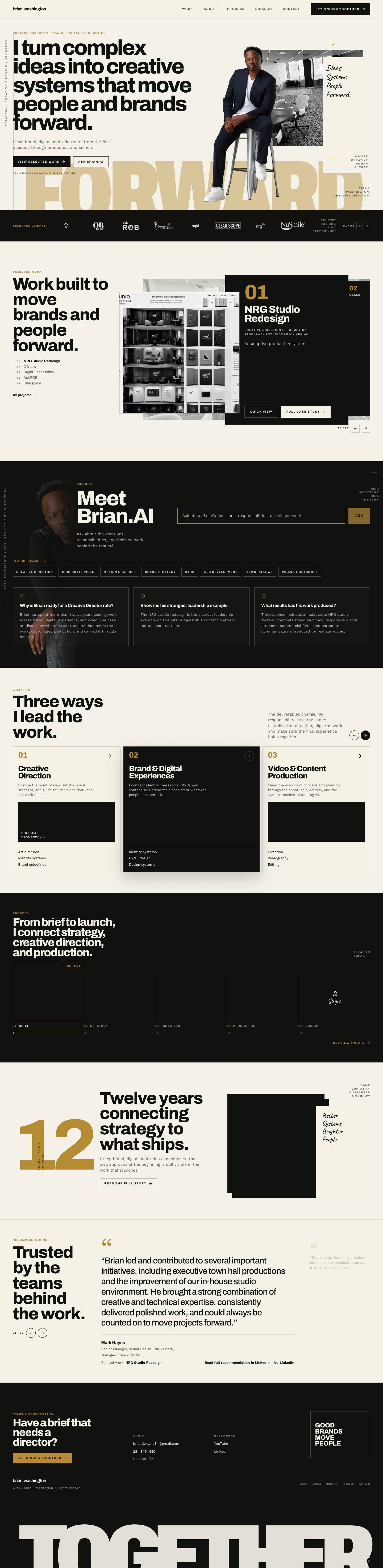
Creative Director positioning
Interactive selected-work experience
Evidence-based Brian.AI recruiter assistant
Detailed editorial case studies
Downloadable and browser-viewable résumé
Responsive recruiter and contact pathways
Accessible keyboard, focus, and screen-reader behavior
06 / Before and after
The change was bigger than the visual design.
Primary position
BeforeMultimedia designer and freelance creative
AfterCreative Director across brand, digital experience, corporate communications, and production
Experience
BeforeSeven years of digital experience
AfterMore than twelve years of multidisciplinary creative experience
Portfolio structure
BeforeSkills, services, and individual project links
AfterCase studies organized around challenges, responsibilities, decisions, execution, and observable outcomes
Audience journey
BeforeGeneral visitors browsing creative work
AfterRecruiters, hiring managers, and clients given distinct ways to evaluate the work and take the next step
Proof
BeforeCapability claims and project thumbnails
AfterPublished case studies, recommendations, résumé access, verified project details, and Brian.AI evidence
07 / Brian.AI
Turn the résumé into a conversation.
Brian.AI was built for recruiters and hiring managers who may arrive with a specific question rather than time to read every case study. It answers with published portfolio evidence and connects each question to relevant case studies, résumé information, leadership examples, and project outcomes.
The experience is guided. It does not invent claims, and it is not an unrestricted general-purpose chatbot.
Same experience. Different questions.
Answer ready.
From published work
How did Brian redesign his portfolio?
Brian repositioned and rebuilt his portfolio from a broad multimedia-design showcase into a focused Creative Director experience. He led the brand positioning, content strategy, UX/UI, responsive development, case-study system, and Brian.AI recruiter experience.
- The original site presented a multimedia designer with seven years of experience and long capability lists.
- The redesign leads with Creative Director positioning, detailed case studies, and a recruiter journey.
- Brian.AI is a guided evidence experience that points to published work rather than inventing claims.
- Creative Direction
- Brand Strategy
- UX/UI
- Web Development
Evidence
Brian Washington Portfolio Redesign
Case study
A personal-brand and website redesign built around strategy, leadership, case studies, and evidence.
Open supporting work →
Related projects
Suggested questions
08 / Responsive experience
The same point of view at every size.
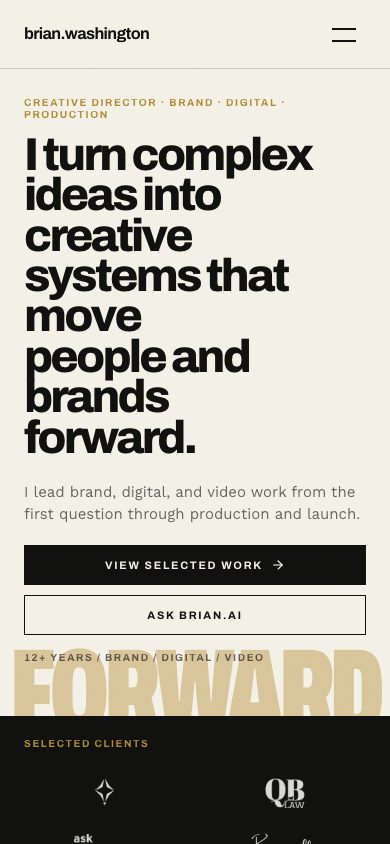
Desktop layouts use scale, movement, overlapping compositions, and generous editorial spacing. Mobile layouts remove nonessential imagery, simplify the sequence, and keep the résumé, case studies, Brian.AI questions, and contact actions easy to reach.
The mobile experience was not treated as a compressed desktop page. Each section was reconsidered so the hierarchy and personality remained clear on a smaller screen.
09 / What changed
A clearer professional position supported by deeper evidence.
Creative Director positioning
The portfolio now leads with the level of responsibility already present in the work rather than the longest possible list of tasks I can perform.
Stronger case-study storytelling
Projects reveal the problem, my role, the decisions I made, and how the final work came together.
A connected body of work
Brand, digital, corporate communications, film, photography, and production now support one professional narrative.
A better recruiter experience
Visitors can browse projects, search Brian.AI, view or download the résumé, review recommendations, and contact me without following one rigid path.
A system that can grow
Reusable project data, editorial case-study components, and responsive patterns make it easier to add new evidence without rebuilding the entire portfolio.
10 / Reflection
The redesign changed what the portfolio says before anyone reads the résumé.
“The original website documented an earlier stage of my career. The redesign gave me room to show the connection between strategy and execution—and to present myself honestly as someone who establishes the direction, stays close to the craft, and carries the work through delivery.”
The portfolio finally reflected the leadership already present in the work.