Selected work / 10
Directing a bookinto a brandecosystem.
One manuscript became a connected publishing, content, product, and reader experience.

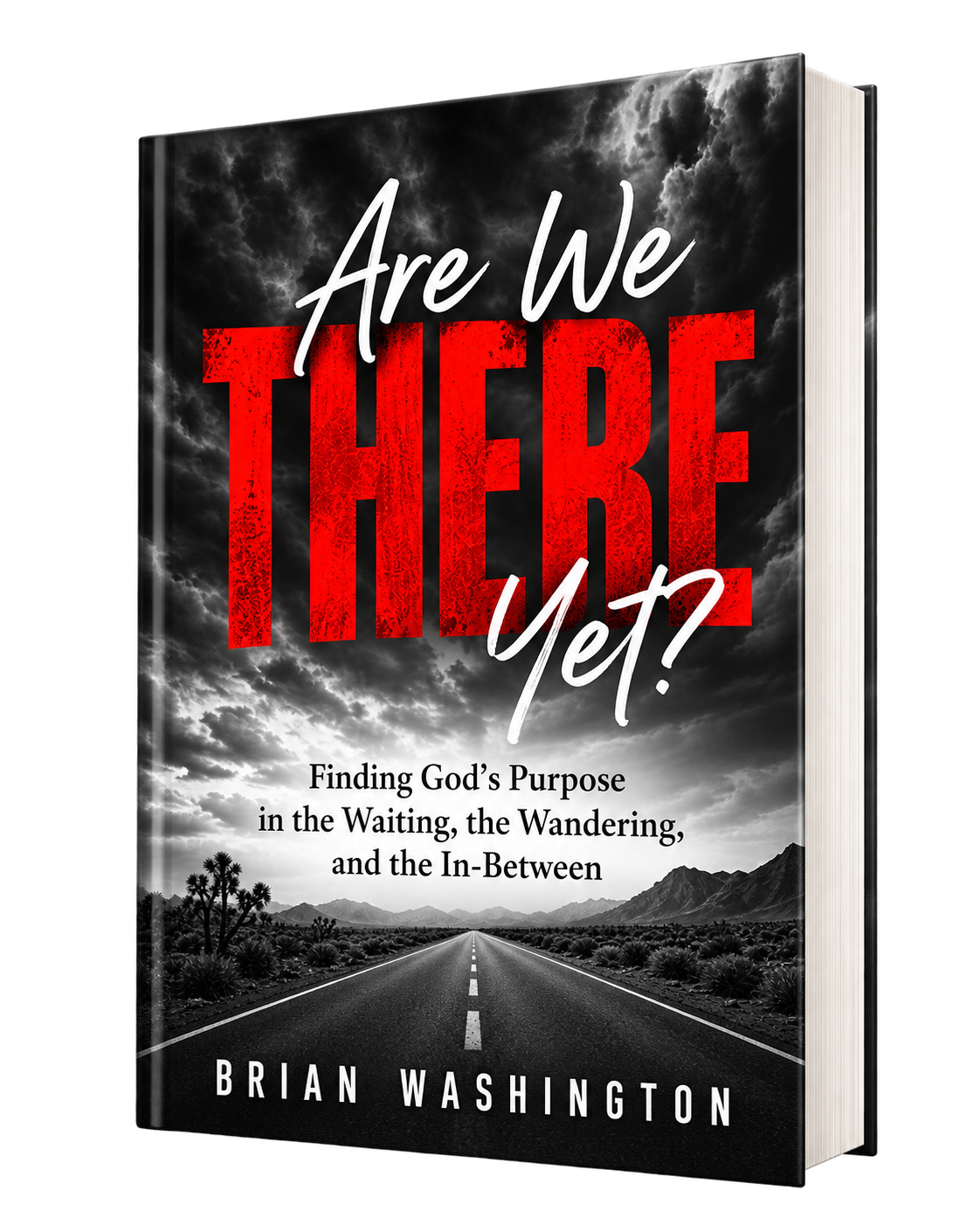
- Client
- Brian Washington Publishing
- Industry
- Publishing & Faith-Based Media
- Role
- Creative Director
- Deliverables
- Brand strategy, publishing, digital experience, content, AI experience
01 / The challenge
More than a book.A world around the idea.
Are We There Yet? began as a faith-centered manuscript about waiting, uncertainty, purpose, and formation. The assignment was larger than designing a cover. The book needed a recognizable position, a flexible visual language, meaningful ways for readers to engage before and after purchase, and a platform that could support future titles.
The challenge was to turn one message into a coherent system without making every touchpoint look or behave the same.
From a manuscript
To a multi-platform ecosystem


02 / Strategy
The road became the system.
The road was more than imagery. It became the decision-making framework for the identity, navigation, products, content, audience journey, and guided reader experience.
Waiting, crossroads, repositioning, beginning again, and returning gave the platform a shared vocabulary. That vocabulary allowed every touchpoint to feel connected while serving a different reader need.
- Road metaphor
A relatable frame for the journey
- Identity & visual system
A consistent visual language
- Content & products
Multiple ways to engage
- Audience journey
A connected path forward
03 / Brand system
A bold, consistentvisual identity.
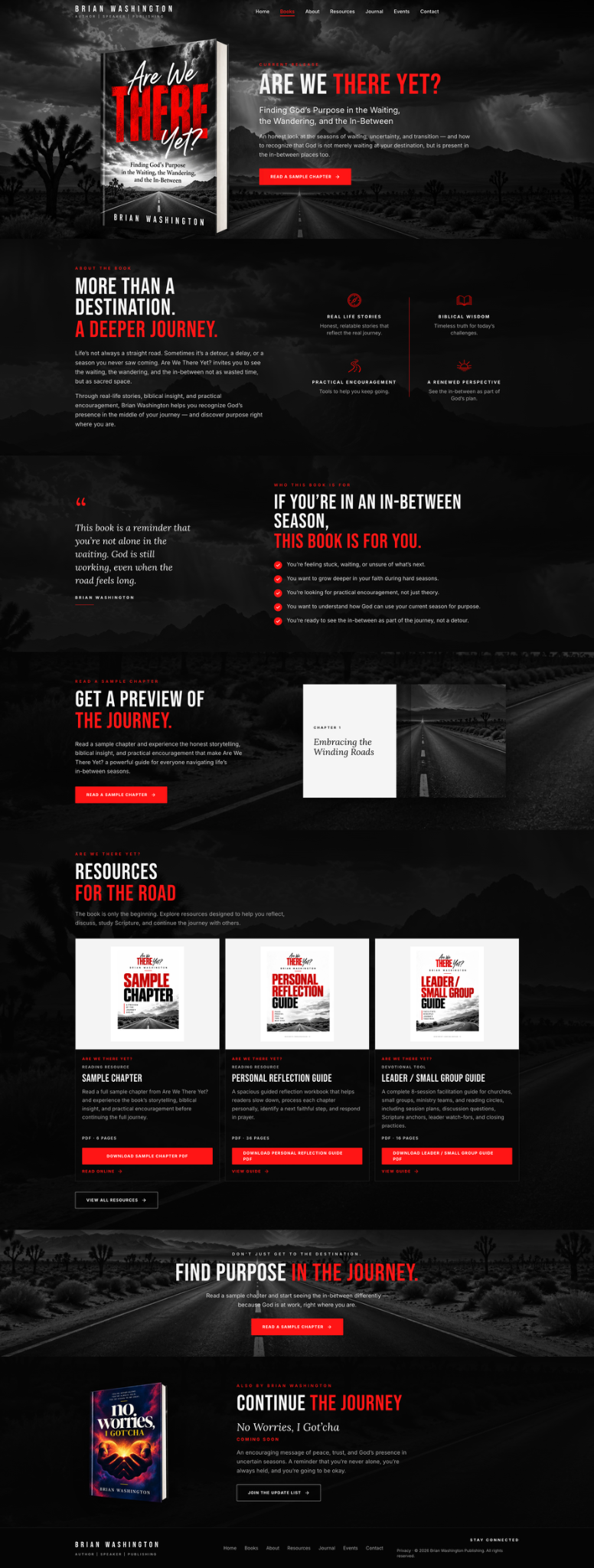
The identity combines cinematic grayscale road photography, condensed typography, handwritten accents, and a controlled red signal color. The system carries across the book, publishing platform, companion resources, editorial content, and guided experiences.
The design principle
The road became the visual thread connecting the book, platform, resources, and guided reader experience.
Typography
- Condensed displayThere
- Modern sans serifA connected system
- Handwritten accentthe in-between
Color palette
Ink#11110f
Brand red#a51f24
Ivory#f3f0e6
Muted gold#b48a32
Identity treatment
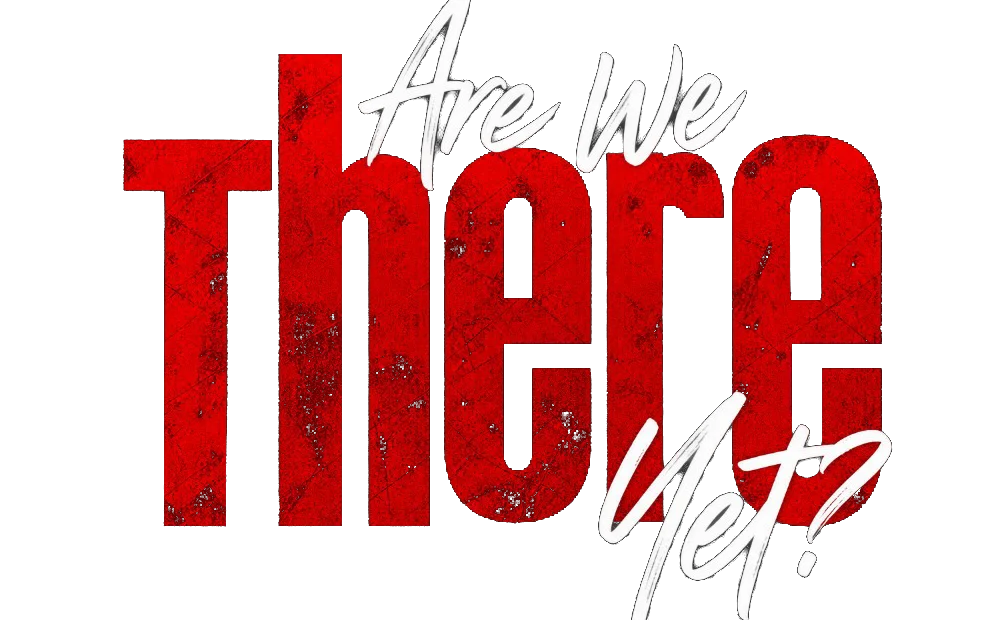
Cinematic monochrome imagery turns the emotional experience of waiting, wandering, and moving forward into a repeatable visual language.

Direction

Uncertainty

Movement
04 / Implemented platform
From book page toreader journey.
The publishing platform gives the book a clear destination while connecting readers to sample content, companion resources, Journal articles, future titles, and relevant next steps.
View live website (opens in a new tab)05 / Companion resources
The book was the entry point.
A focused set of companion resources extends the book for individual readers, small groups, and church leaders.
Explore all resources (opens in a new tab)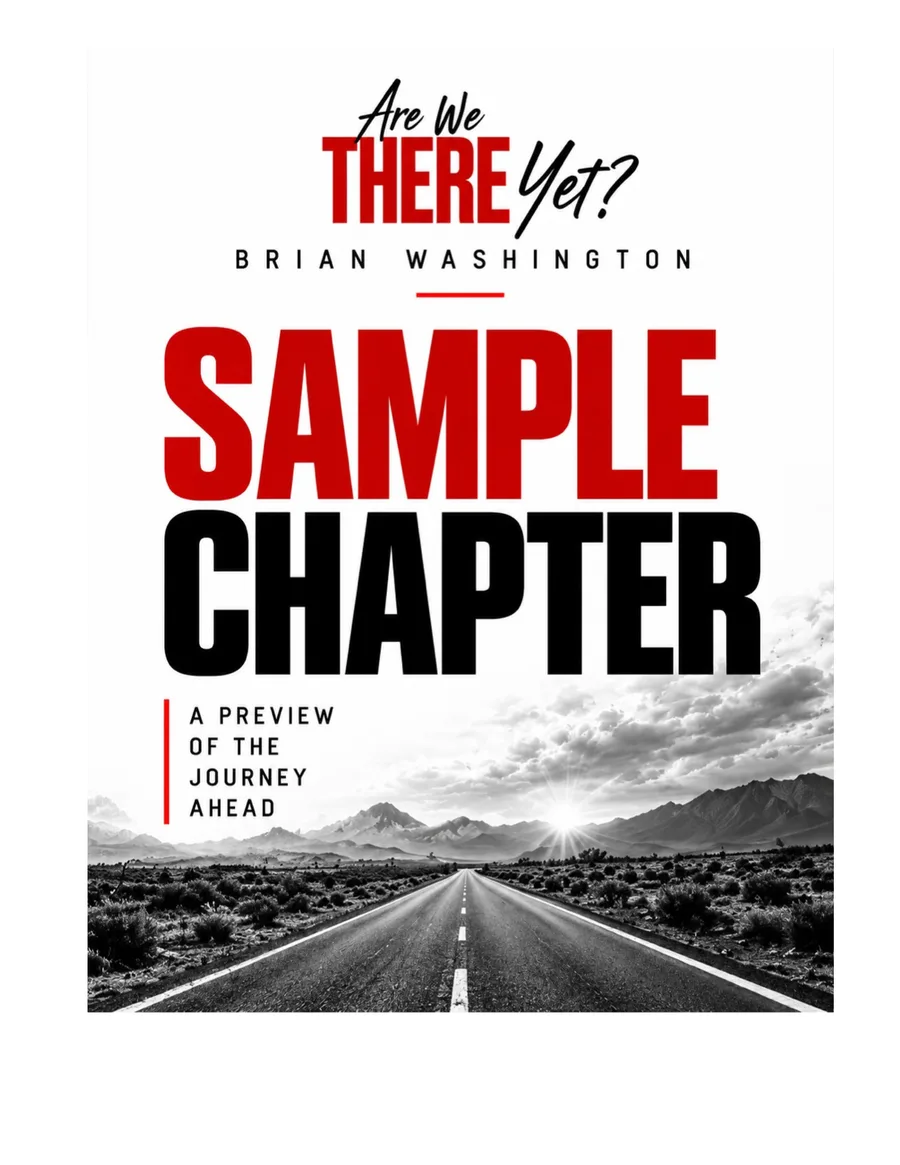
Sample Chapter
Read the voice and the message before taking the next step.
Read sample chapter (opens in a new tab)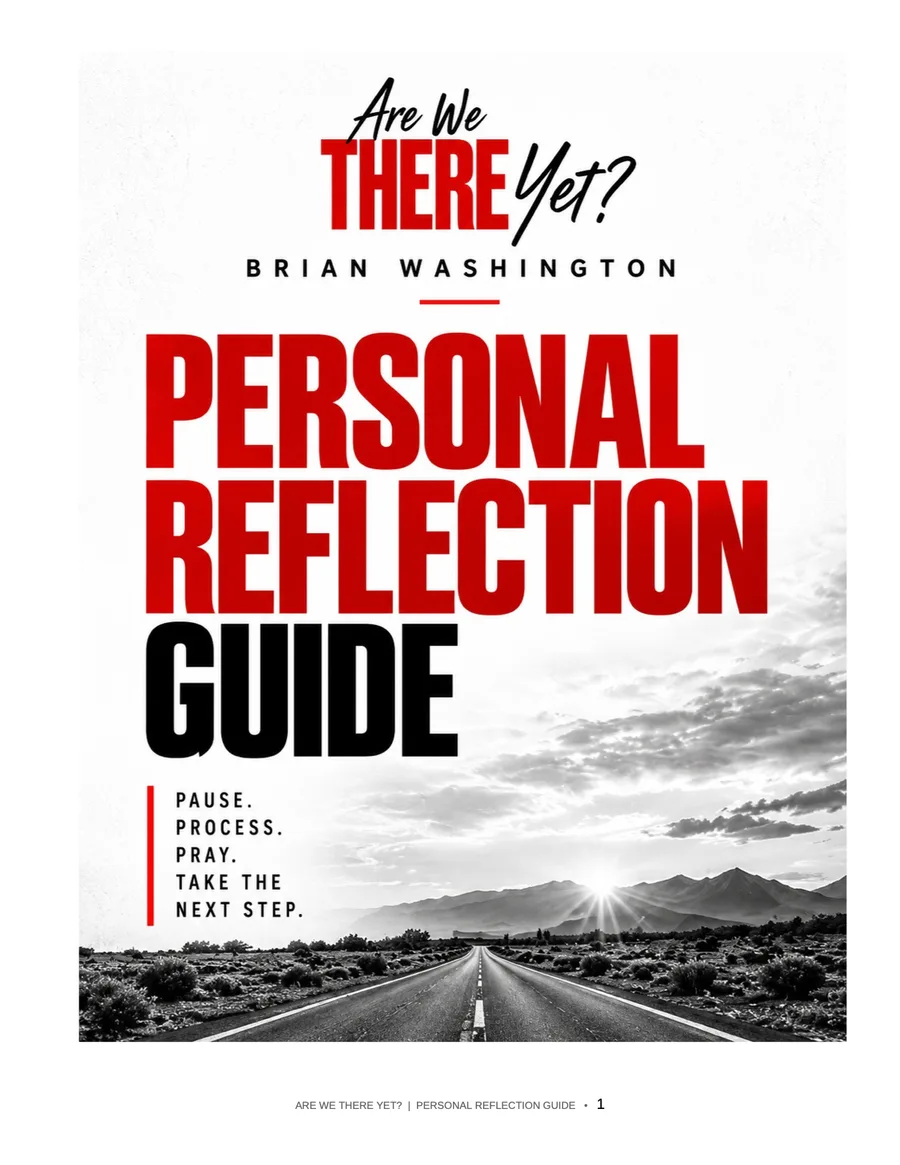
Personal Reflection Guide
A workbook for slowing down, naming a next faithful step, and praying.
Open reflection guide (opens in a new tab)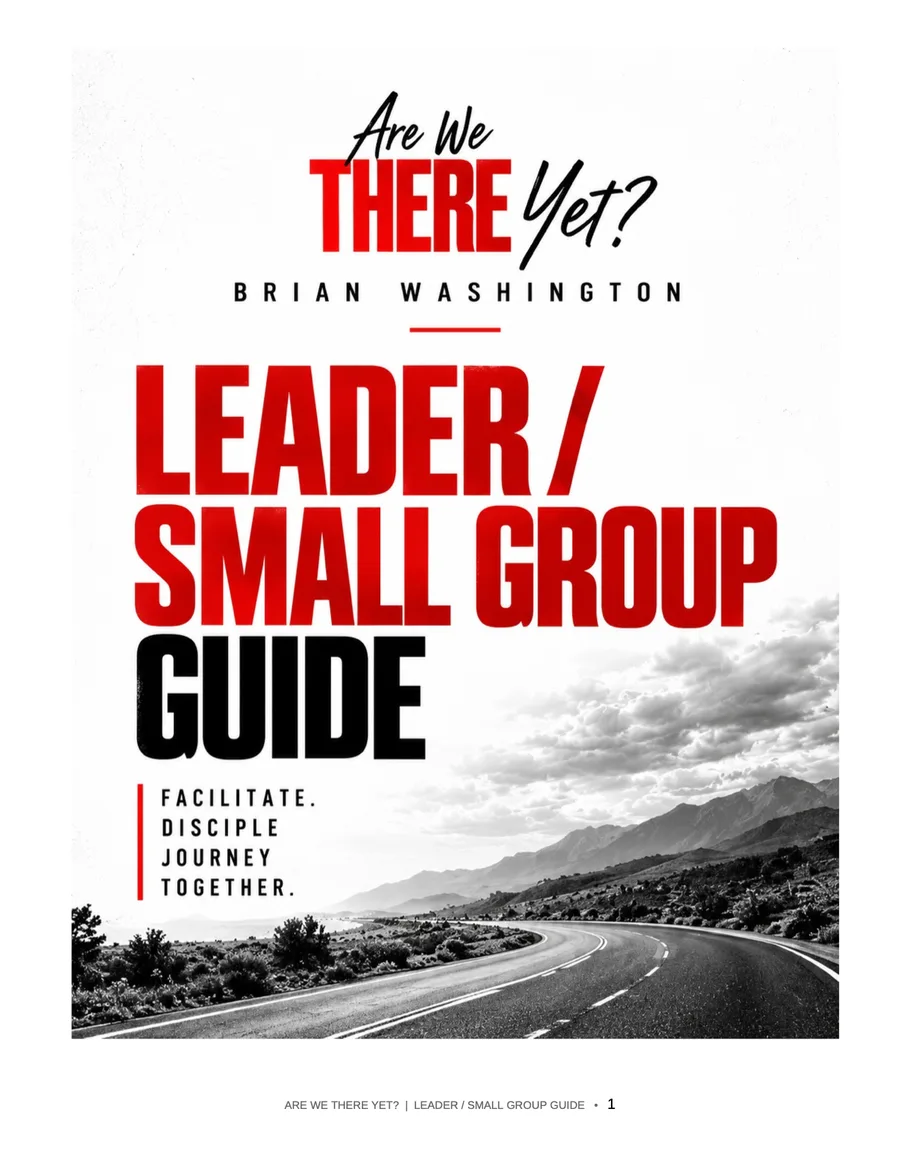
Leader / Small Group Guide
An eight-session plan for churches, ministry teams, and small groups.
Open leader guide (opens in a new tab)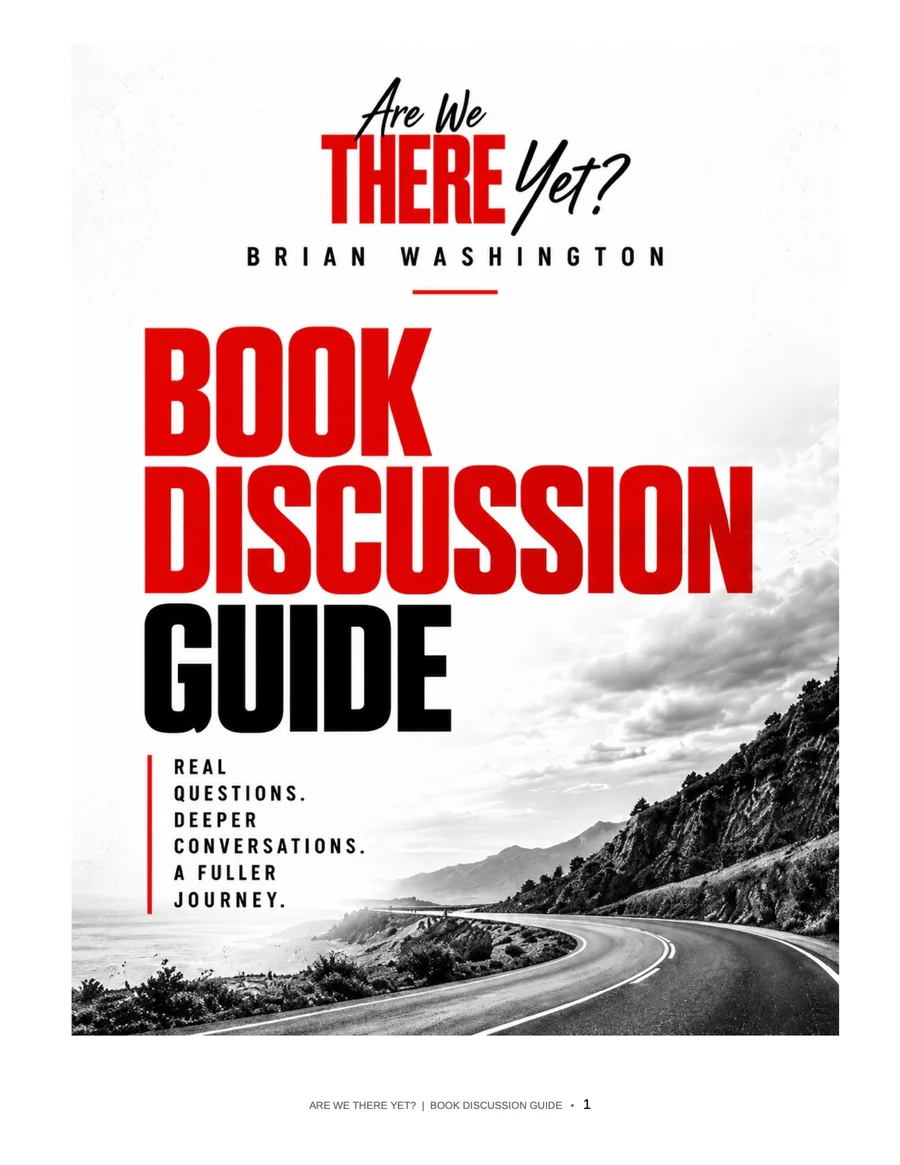
Book Discussion Guide
Ten questions a chapter for book clubs, church groups, and reading circles.
Open discussion guide (opens in a new tab)
06 / Find Your Mile
Five questions.A more relevant next step.
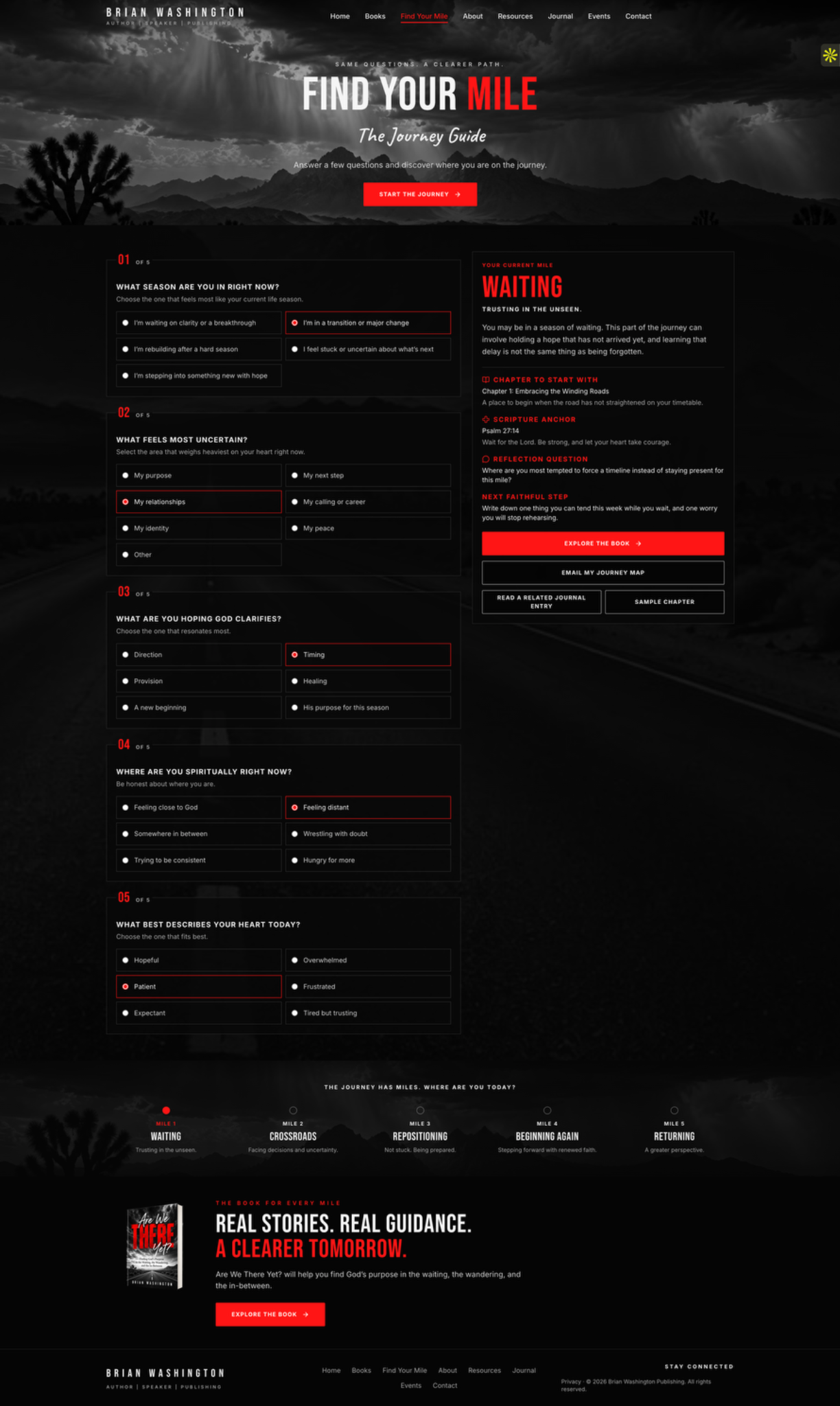
Find Your Mile translates the book’s road metaphor into a guided reader experience. Five questions identify where a reader feels they are in the journey and connect that response to a Journey Mile, relevant chapter, Scripture anchor, reflection question, and next faithful step.
The experience supports discovery. It does not diagnose, counsel, or claim spiritual certainty.
Try the journey (opens in a new tab)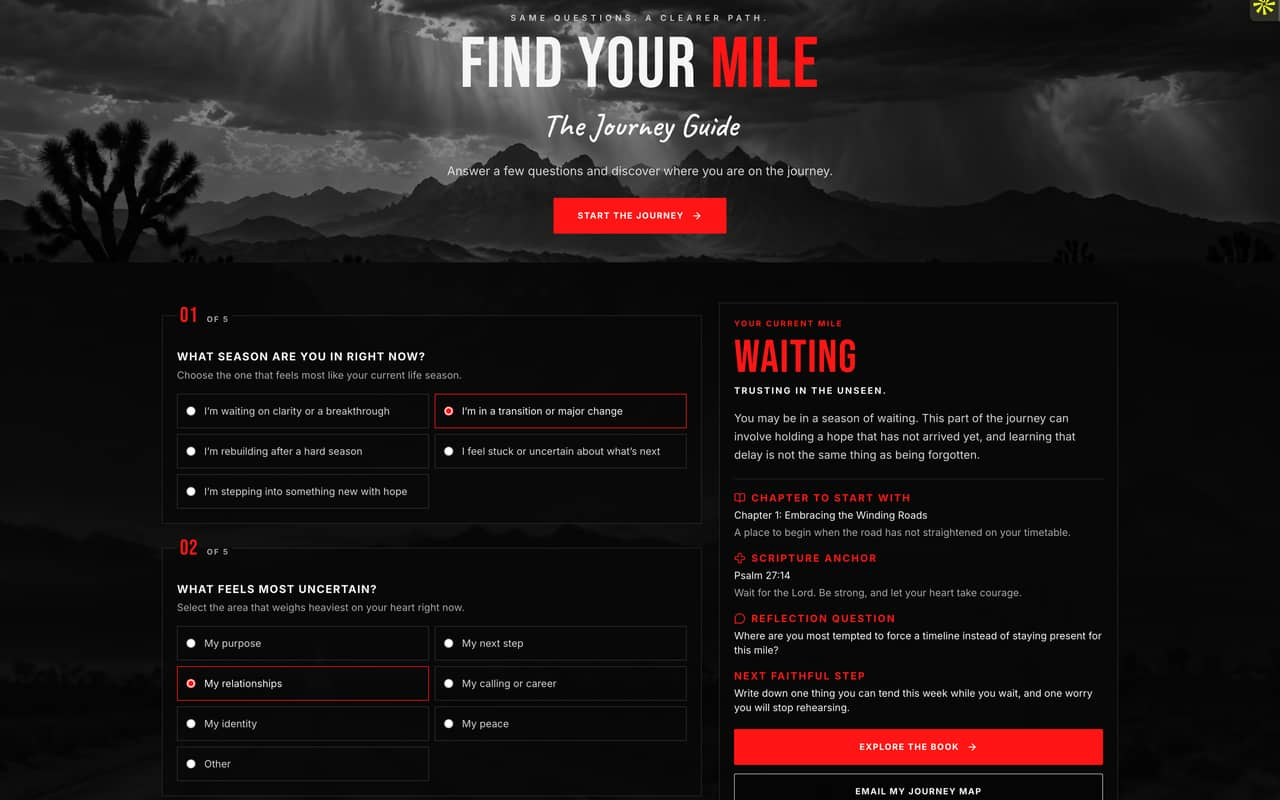
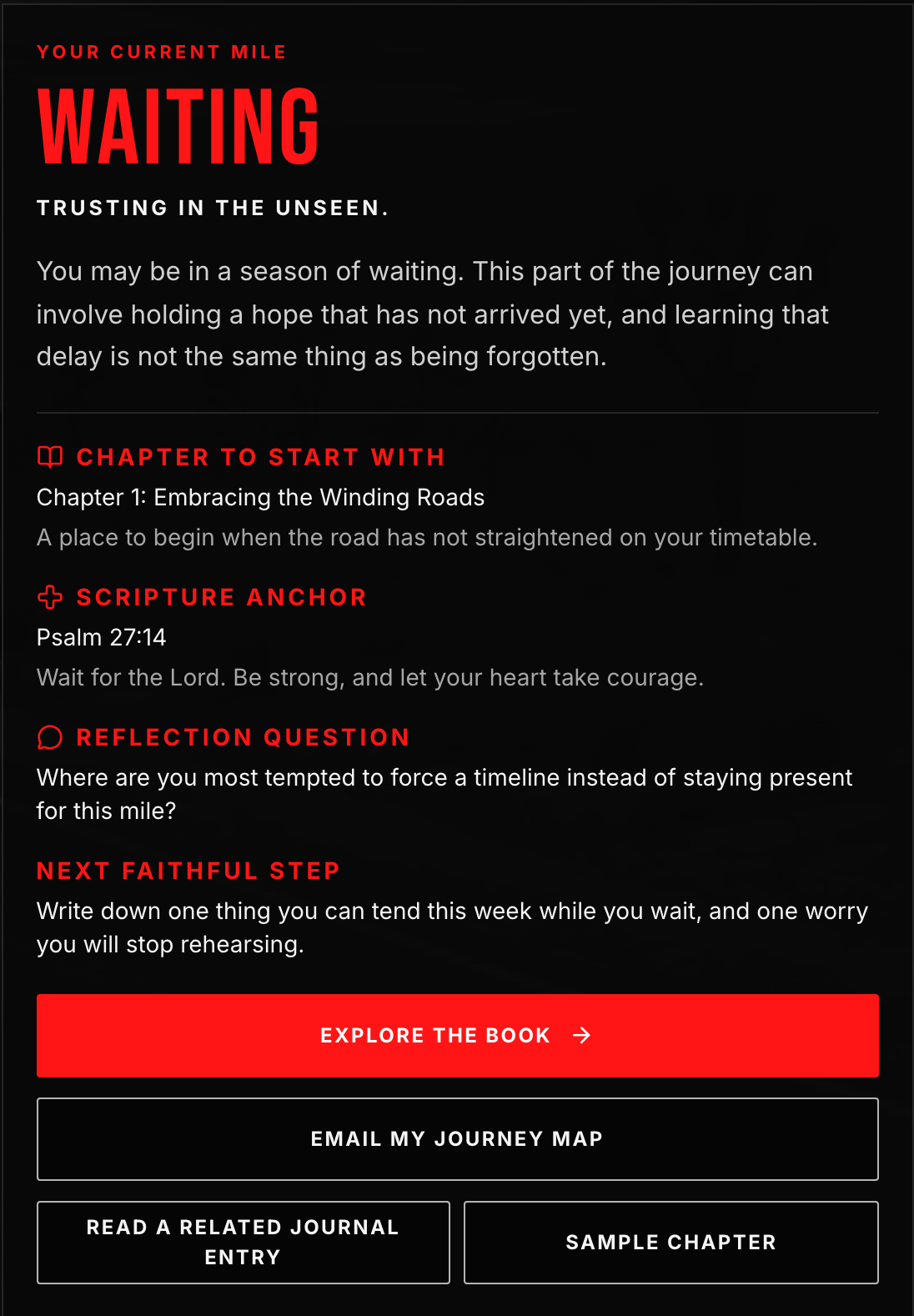
- QuestionsIdentify where you are
- Journey MileGet your result
- ChapterStart reading
- ScriptureBe anchored
- ReflectionGo deeper
- Next stepTake action
07 / Content strategy
A continuous journey through content.
The Journal turns existing articles into long-term discovery assets. Search and social entry points can lead readers into relevant ideas, the book, companion resources, and consent-based email paths.
The work included organizing the archive, clarifying categories, establishing a repeatable article structure, and connecting editorial content to the larger publishing system.
View the Journal (opens in a new tab)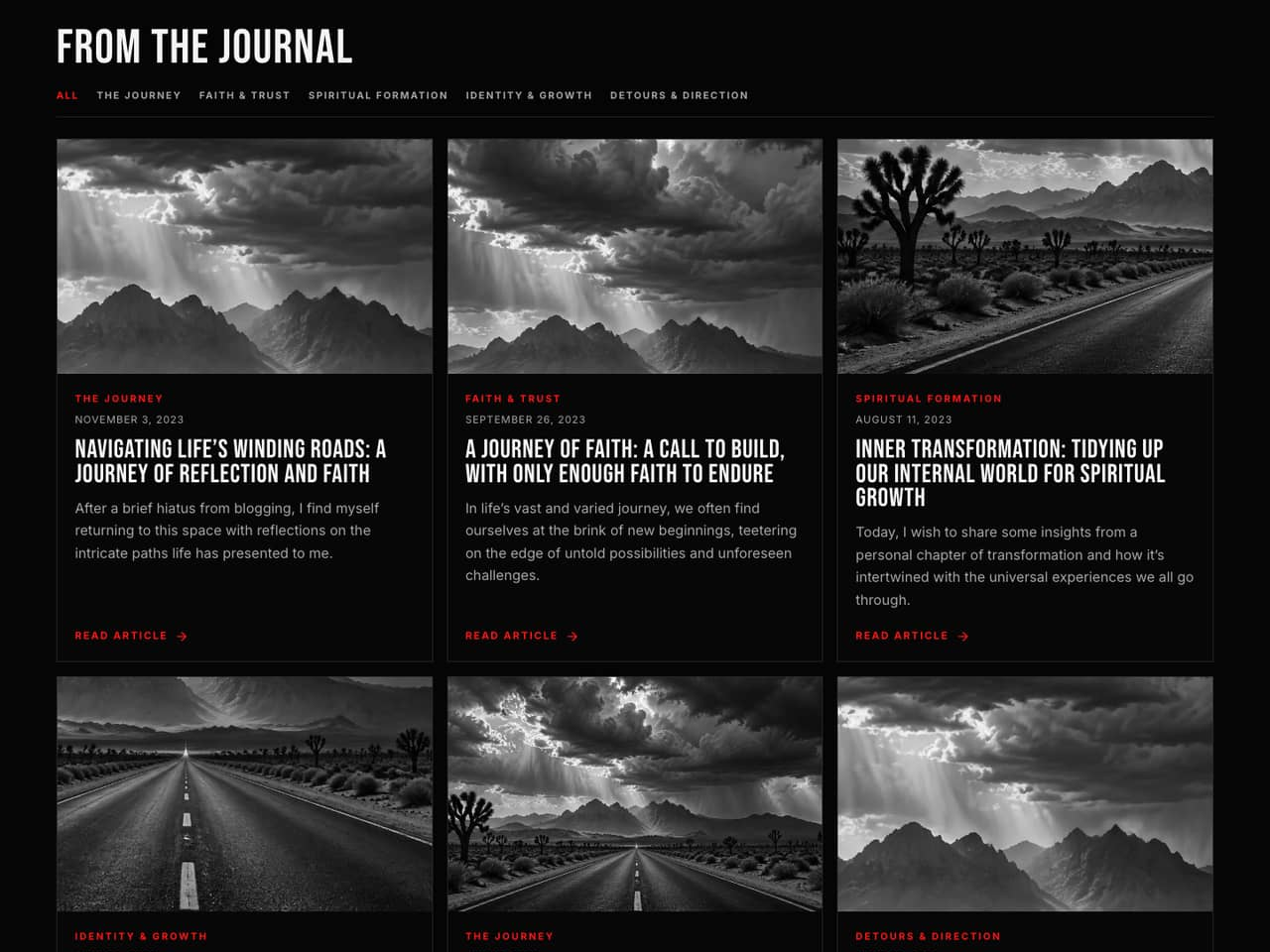
Stage 01
Discover
Meet the reader where the question begins.
- Website
- Events
- Social or shared content
Stage 02
Explore
Give the reader multiple ways to enter the idea.
- Book
- Sample chapter
- Journal
Stage 03
Personalize
Connect the content to the reader’s current season.
- Find Your Mile
- Recommended chapter
- Scripture and reflection
Stage 04
Continue
Create a permission-based path for continued growth.
- Resources
- Journey List
- Future content
08 / Audience system
Consent-based audience pathways.
The platform does not force every reader into the same funnel. Readers can explore the book, use the guided experience, and choose whether to continue through relevant resources and email. That creates a more respectful relationship while giving the platform a clear path for ongoing engagement.
The audience system was designed around permission, relevance, and continued value—not automatic capture.
Example touchpoint
A voluntary continuation point for readers who want reflections, resources, and book updates.
09 / System architecture
Four layers. One reader logic.
Every touchpoint shares the same message, visual language, and reader logic—from first discovery through continued engagement.
- 01Story and brand
The organizing idea and visual system
- 02Website and content
Book pages, journal, and resources
- 03Guided experience
Find Your Mile and personalized recommendations
- 04Audience relationship
Permission-based continued engagement
10 / Outcomes
A complete, connected platform.
These are inventory counts from the system that shipped. They are not performance results.
- 1
Connected publishing platform
- 6
Companion resources
- 5
Journey Miles
- 2
Audience lists
- Migrated journal
Editorial archive integrated into the new platform

11 / Reflection
Creative direction made the idea bigger than the book.
Creative direction begins by deciding what an idea needs to become. For Are We There Yet?, that meant creating a coherent world in which readers could see the road, read about it, reflect on it, identify their current mile, and find the next relevant resource.
The work was not to decorate a manuscript.
It was to create the system readers would enter.